Ringing a loud bell on Wall Street, 66-year-old JPMorgan CEO Jamie Dimon said the U.S. economy is heading to recession in 2023, saying it was “very, very serious,” citing the current runaway inflation, high interest rates and the Russian War in Ukraine. Dimon runs a $128,296 billion enterprise, hoping to prevent revenues from shrinking in 2023. But the 66-year-old CEO, considered the most savvy executive on Wall Street, raises urgent questions about 79-year-old President Joe Biden’s management of the economy. Dimon cites runaway inflation, high interests rates and the Ukraine War as the biggest drivers of the impending recession. But Dimon knows beyond any doubt that Biden’s proxy war in Ukraine drives global markets into the worst inflation in over 40 years, devaluing the Euro and British pound Sterling to the lowest point on record, all to prosecute his Ukraine proxy war.
Dimon didn’t pull any punches blaming today’s the economy on Biden’s abysmal decision-making.”These are very, very serious things which are likely to push the U.S. and world—I mean, Europe is already in recession—and they’re likely to put the U.S. in some kind of recession six-to-nine months from now,” Dimon told CNBC’s Juliana Tetelbaum in London. When it comes to Q3 Groos domestic product, it’s possible the U.S. economy ekes out a 2% gain, essentially remaining flat. Biden’s pandemic relief, infrastructure and recent Inflation Reduction bills have put trillions on the Federal Reserve Board’s balance sheet, now exceeding $31 trillion. U.S. federal budget deficits are now expected to run over $2.2 trillion in 2022. Dimon thinks the Fed didn’t act fast enough to stop the runaway inflation, now hiking interest rates, driving the U.S. economy into recession in 2023.
Whether the GDP turns negative in 2023, it’s already flat, signaling that the Fed’s rate hikes have already slowed the overheated economy. “But you can’t talk about the economy without talking about stuff in the future—and this is serious stuff,” Dimon said, heading the U.S. largest bank. Dimon parallels his thinking to 56-year-old Mohamed El-Erian, Allianz SE chief financial officer and President of Cambridge University. El-Erian sees the U.S. and EU falling into stagflation, the stubborn period in the early 80s where inflation continued to punish ordinary consumers in slow economic growth. Dimon criticized the Fed for acting slowly on inflationary pressure, reaching a crescendo when Biden started his proxy war against he Russian Federation. Once Biden boycotted Russian oil and EU allies went along with it, it drove widespread shortages and skyrocketing energy prices.
Whatever Biden’s pandemic and post-pandemic spending, the Russian oil boycott drove a massive inflation in energy markets, driving the cost of goods up to near record levels. Keeping the war going for the last seven months offers financial markets no reassurance, especially after Biden’s Oct. 6 remarks about Armageddon. Financial markets don’t like uncertainty, especially with the U.S. fighting a proxy war with Ukrainian troops against the Russian Federation. “From here let’s all wish [Fed Chairman Jerome Powell] success and keep our fingers crossed that they managed to slow down the economy enough so that whatever it is, is mild—and it is possible,” Dimon said. But Dimon knows that if the Ukraine War rages on, it’s going to fuel inflation and drag the economy into recession. Powell admits he has no control of geopolitical events that drag down the economy.
U.S. consumers, accounting fro two-thirds of U.S. GDP, can’t take the high gas prices too long without belt-tightening, something already happening. Dimon said nothing about the nationwide real estate slowdown where high mortgage rates have put a damper on residential real estate sales. With many real estate owners using Home Equity Lines of Credit, it just a matter of time before the spigot runs dry. Real estate slow downs often fuel recessions, something inevitable if interest rates continue to rise. “It can go from very mild to quite hard and a lot will be reliant on what happens with the war,” Dimon said, sending a loud message to Biden to wrap up the Ukraine conflict or continue to drive the U.S. economy into recession. Biden has so far shown no willingness to consider the Ukraine War as a drag on the U.S. and world economies, pushing global markets into recession.
Dimon has raised the red flag for all to see that Biden’s proxy war against the Russian Federation is driving the U.S. and EU into recession. Fed Chairman Jerome Powell can only do so much when geopolitical factors continue to drag down the economy. Raising interests rates more, Powell hopes to slow down runaway inflation but doesn’t know whether he can orchestrate a “soft landing.” Dimon predicted that the S&P could drop an ”another easy 20%,” and that “the next 20% would be much more painful that the firs,” Dimon said. If stock markets continue to meltdown, it’s going for force corporations to start laying off employees, a more typical sign of recession. So far the unemployment rate remains at historic lows of 3.5%, the inflation pushed the Fed to continue ratcheting up interest rates. Dimon put his finger on the big question of how much longer Biden battles Putin.
About the Author
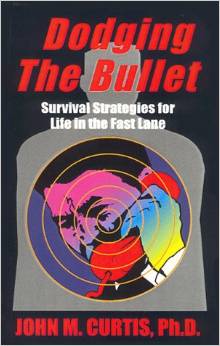
John M. Curtis writes politically neutral commentary analyzing spin in national and global news. He’s editor of OnlineColumnist.com and author of Dodging The Bullet and Operation Charisma.