LOS ANGELES (OC).–Wall Street’s smart money liked what it sees with the prospects for an Iran peace getting closer in sight. While nothing is definite yet, Wall Street watched more record highs in the Nasdaq and S&P today, with gold rocketing up $73 to $4,880 an ounce showing that markets are in a buying mood. When the Iran War escalates, Wall Street heads south with investors selling off due to uncertainty. But all things considered, it’s looking more that Iran’s mullah regime wants to strike a deal in Islamabad to end the war and consolidate its power for now. How long the mullah regime remains in power is anyone’s guess. If the Iranian Kurds have their way, the mullah government would end tomorrow, granting a Kurdish homeland in the borderland near Iraq. When it comes to ending the war, Iran really has no choice since its military has been neutralized by the U.S. and Israel.
Israel’s war with Hezbollah in Lebanon had been a major obstacle to any kind of peace deal with Iran. But Trump managed to get Lebanon and Israel to meet in Washington for the first time in over 40 years. Lebanon has been torn apart by civil war and Hezbollah’s occupation of southern Lebanon causing war with Israel. Iran sponsors the war in Lebanon by funding-and-arming Hezbollah, something that must stop in the future. Whether Iran stops funding-and-arming Hezbollah is anyone’s guess. Iran’s mullah regime doesn’t have too many options left, certainly not blockading the Strait of Hormuz. With ships sailing freely through the international waterway today, the price of oil dropped precipitously expecting normal supply chains restored in short order. Iran’s mullah regime is too battered to continue stretching out the war with the U.S. any longer.
When it comes to the next round of Islamabad peace talks, the U.S. delegation led by Vice President J.D. Vance will more flexibility with demands to completely end Iran’s nuclear enrichment program. In the first round of talks, Vance insisted that Iran suspend its nuke program for at least 20 years. With all the B-2 Stealth bombing of Iran’s nuclear sites, it’s doubtful that Iran will enrich uranium anytime soon. What’s most important in peace talks is getting Iran to end control of the Hormuz Strait. Arab Gulf States, supplying some 20% of the world’s fossil fuel supplies, must have open access to the Strait to get products to market. Trump has hisj own blockade on Iranian ships until the mullah regime agrees to keep the Strait of Hormuz opened permanently to all commercial shipping. Iran wanted sovereignty of the Hormuz Strait.
Trump wants Iran to surrender its stockpile of enriched uranium, something he calls “uranium dust.” Whether Iran agrees to surrender its uranium stockpile is anyone’s guess. But given it’s useless enriched uranium, it poses no threat to anyone, certainly not the United States. U.S. negotiators in Islamabad need a peace agreement that permanently opens up the Hormuz Strait and agrees that to suspend any nuclear enrichment for a specified time. Vance asked Iran to suspend uranium enrichment for 20 years. Compromising on that point should allow Vance to cut a deal that keeps the Strait of Hormuz open indefinitely, satisfying the need of Arab Gulf states to get their products to market. Supply side shortages have already hit European, concerned about running out of jet fuel. If Iran’s mullah regime wants to survive, they need to cut a peace deal with Vance.
Trump has been relentlessly criticize by Democrats and the fake news for the Iran War, claiming he had no clear objectives or rationale. Since the 1979 Islamic Revolution, Iran has engaged in state-sponsored terrorism, paying-and-arming proxy terror groups to attack Israel and other U.S. interests. Trump is the first-and-only U.S. president to take military action against Iran to stop its nuclear enrichment program, something that’s been running out-of-control, enriching uranium to 60%, right below weapons grade. When Israel asked Trump to join its 12-day war with Iran last June, Trump agreed, sending in B-2 Stealth bombers to neutralize Iran’s underground nuclear enrichment facilities. U.S. officials know that Iran’s underground nuclear enrichment industry has been put out-of-order. Trump’s recent war neutralized Iran’s capacity to wage war against its neighbors.
Going back to Islamabad to finalize a peace deal, the U.S. delegation must nail down what’s important, knowing Iran’s nuclear enrichment program no longer threaten’s Israel or its neighbors. What’s important now is opening up the Strait of Hormuz for commercial shipping. Blockading the Strait has already produced supply chain problems with shortages of jet fuel hitting the European Union. Ending the war gives Wall Street the best opportunity to keep up the bull market. Trump plans to keep the U.S. blockade on Iranian ships until Iran signs a peace deal agreeing to keep the Strait of Hormuz open and suspend nuclear enrichment activity for the foreseeable future. Six weeks of war has neutralized Iran’s military capability, no longer able to menace Israel and U.S. interests in the Middle East. Iran has no option other that settling the conflict at the earliest possible time.
About the Author
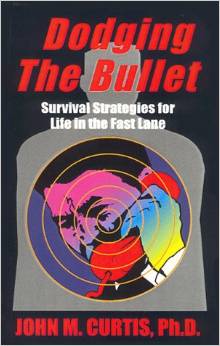
John M. Curtis writes politically neutral commentary analyzing spin in national and global news. He’s editor of OnlineColumnist.com and author of Dodging The Bullet and Operation Charisma.